The pad under your slab is the foundation under the foundation. Get it wrong and the slab cracks, the building settles, the doors stop closing. Get it right and the structure sits dead-level for the life of the building. We build pads the way they need to be built for Valley soil. Caliche base, lifted and compacted, sized to your footprint, and shaped to drain.
What's Included
A typical pad job includes some mix of:
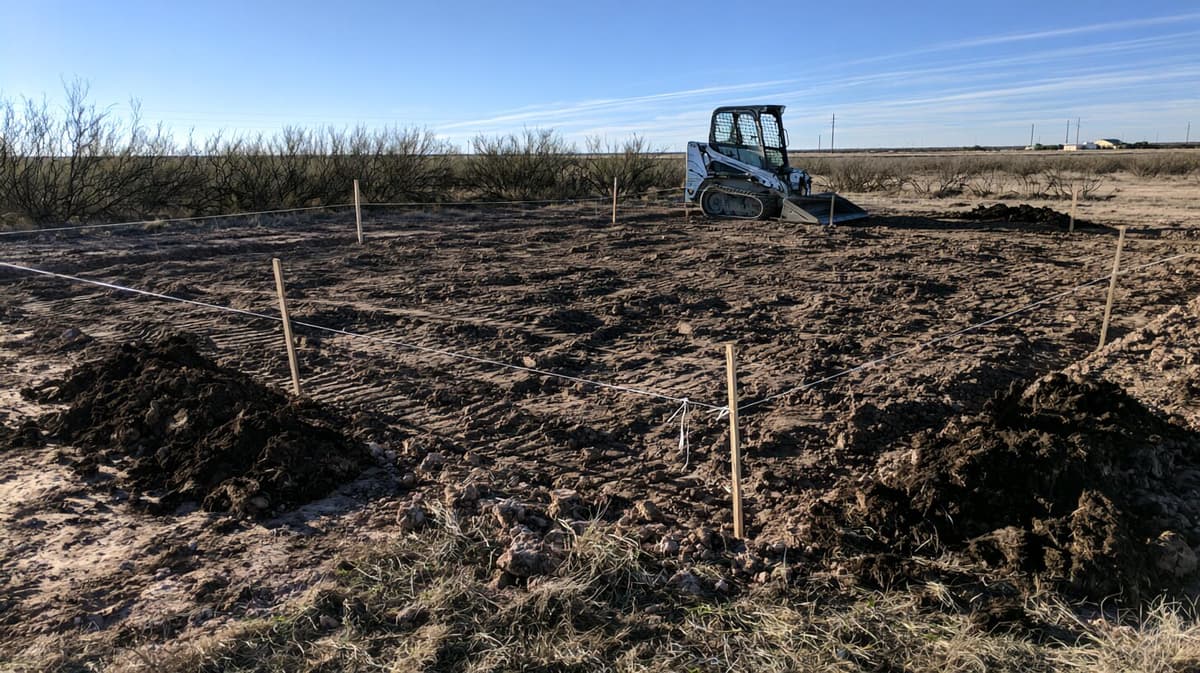
- Site clearing & stripping — removing topsoil, vegetation and unstable material before the pad goes in.
- Sub-grade prep — leveling and compacting the existing ground before fill.
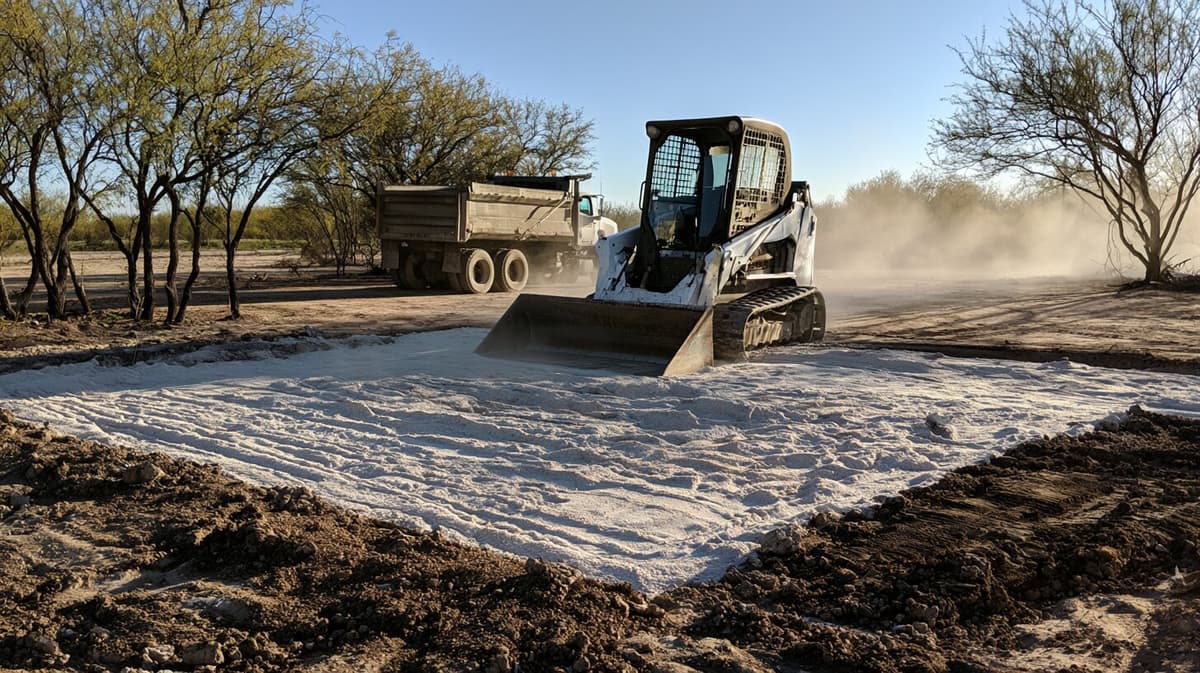
- Caliche fill — clean caliche brought in by the truckload and placed in lifts.
- Compaction by lift — each layer rolled and proof-compacted, not just dumped and called done.
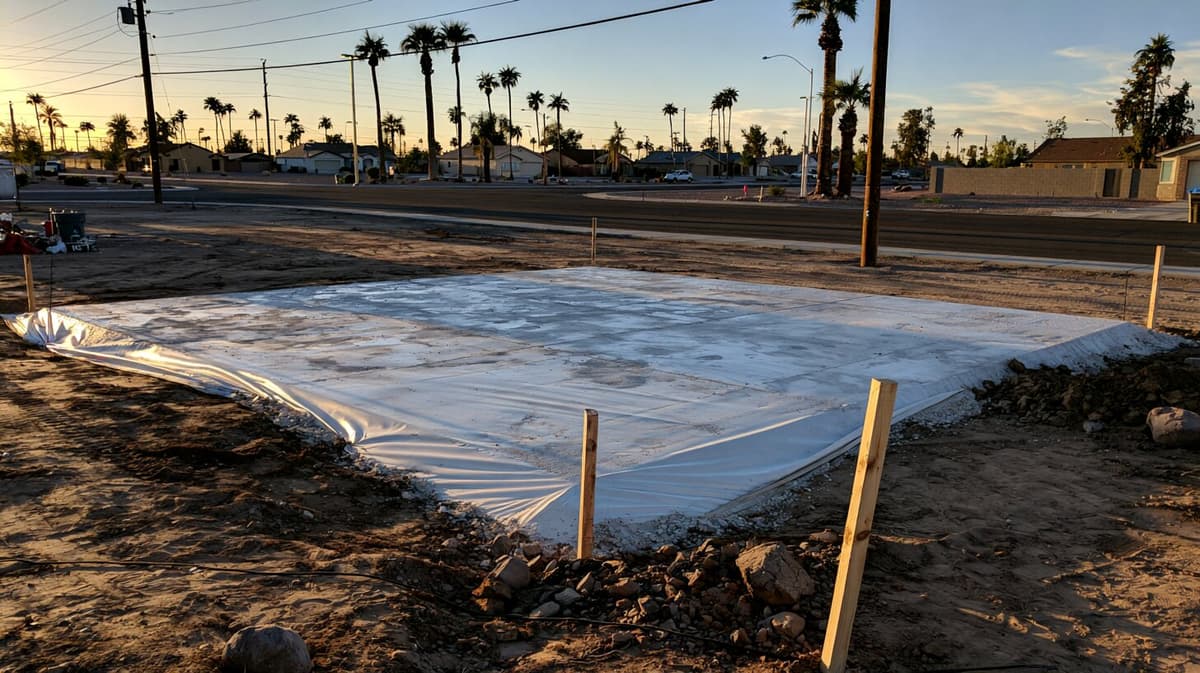
- Final grade & sizing — pad shaped to the building footprint with proper drainage slope.
- Engineered-spec pads — built to whatever the engineer or builder calls for (depth, density, dimensions).
Our Process
1. Site walk & spec
We look at the lot, talk through what's getting built (house, shop, metal building, barndominium), and review any engineer's spec for the pad.
2. Written quote
Firm price, scope and timeline, including how much caliche is going in and how it's getting compacted.
3. Build the pad
Strip, sub-grade, haul caliche, place in lifts, compact each lift to spec.
4. Final shape & inspection
Pad cut to dimensions, drainage slope set, density checked, ready for the slab crew or framer.
Why Pads Are Critical in the RGV
Valley soil is mostly expansive clay over caliche. Clay swells when it's wet and shrinks when it dries, and South Texas does both, hard. A slab poured directly on untreated clay moves with the moisture, and the building moves with it. A properly built caliche pad gives you a stable, compacted base that doesn't react to moisture the way raw clay does.
We size and compact pads for the actual building going on them. A barndominium needs a different pad than a metal warehouse, and both need different work than a residential slab. We build to the engineer's spec where there is one, and to what the soil and footprint demand where there isn't.
Building Pad FAQ
How much does a building pad cost in McAllen?
It comes down to size, depth, how much caliche is needed, and whether we're hauling material off first. A residential house pad and a 40x60 metal building pad are very different jobs. We give you a firm written number after a free on-site look.
Do you build to engineer's spec?
Yes. If you have a soils report or an engineer-stamped pad detail, we build to it: depth, lift thickness, compaction percentage, dimensions. If you don't, we'll build to what the soil and building type call for.
What kind of caliche do you use?
Clean caliche from local Valley pits, sized for compaction. We don't cut corners by using mixed-in fill material, and every lift gets compacted before the next one goes on.
How long does a pad take to build?
Most residential pads are a one- to two-day job. Larger commercial pads or pads with deep cut-and-fill take longer. We give you a realistic timeline in the quote.